Haute Couture is a high-end, hand-made fashion piece that is made up of only the finest materials. often making these pieces incredibly expensive and one of a kind, as they are made for specific clients and/or events. The garments are tailored to the clients measurements, making them incredibly exclusive and the when they are put into a show, the shows often become private and only the brand’s most valued clients are allowed to view it. These would be VIP’s, celebrities, major influencers and clients. If you are into fashion, it would most likely be a dream of yours to be invited to events like these.
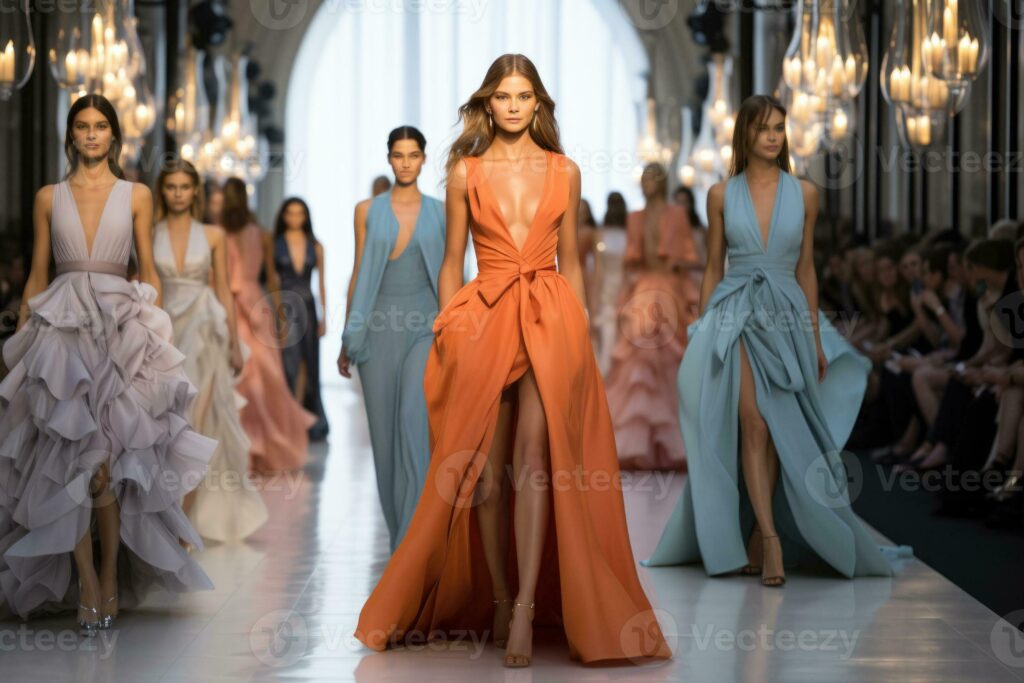
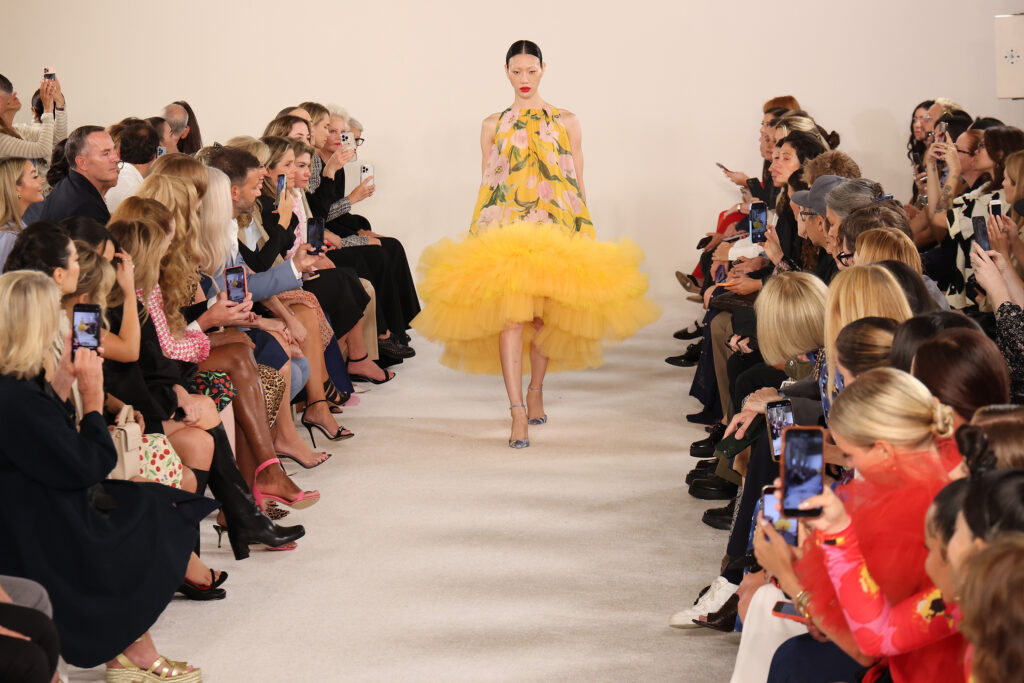
Runways are where style meets the spotlight, where designers can showcase their latest creations and collections to the world. Which acts as inspiration for the latest trends which practically dictate our lives. Even if you are not going for the modern look, fashion shows and runways include many themes which influence all aesthetics and outfit choices.
Some will see it is fabric and clothes thrown together but others will see fashion as a piece of art, a story, a culture and a business. This is all done through specific styles, silhouettes, shapes and fabrics. They create an atmosphere of creativity and imagination while acting as a spectacle to capture onlookers eyes.
When we think of major glamorous runways we often immediately think of runways such as Victoria Secret and Paris Fashion Week. I am going go through the different runways starting from 2012 with Victoria’s secret.
For my portfolio I will include a large amount of things i have made, all varying in medias. Ranging from fine arts, baking, sewing, and more which I have taken. this is done to show off my versatility in many different creative styles.
P.S. For me as of the time i am writing this, my prom starts in a month and i have already started preparing but the days draw closer and as a student, so have my exams so the making of thi prom dress is carefully slotted in between my exams.
When I was much younger i was told that in secondary school i would have a prom but i always thought of it as far more glamour out than it quite possibly is. However the thought still excited me regardless as it is an evening where i can dress to the nines and spend the most amazing time with my friends before i go off to a completely different college to them. The idea of this is imposing but despite all my worries about losing my friends and starting a new college, i am still so excited to see what the future holds for me as someone who is passionate about fashion and art.
This prom is to be one of the biggest nights of my life so far and i am over the moon about it. However the main question about prom is: What do i wear?
This is always the big question as the aim is to not match with anyone while staying on a good budget as it is an outfit you only wears once. You have to be so careful as well as the aim is to not outshine anyone and have them compare their dress top yours while also not having a basic enough dress where you end up comparing yourself to others. You also have to make it looks like an expensive gown while also keeping it comfortable as it is something you will splendid your evening in. But on top of all of this you have to have it be specialised to you, to showcase your personality. It seems a bit tedious and searching for a good enough dress is so stressful. Then you have to find accessories for it but that is a later problem. With all this on my mind and more due to insane amounts of exam stress, i have decided to make my own so it’s can check off all these factories while still being something i am happy and excited to wear.
When i was younger I was dead set on wearing a massive ball gown with an insanely tight corset our bodice that would have had me practically begging for a proper deep breath. But now as i got older i am against this idea that my dress needs to be massive and constricting and this is due to me maturing and growing confident with my body and not wanting it to look like i have had all my ribs removed from me. Also as i got into fashion i realised how expensive the materials would be for a massive ball gown and with the way this economy is going….no thank you. I do not want to spend that much money especially as I’m only a student at the moment.
But i have finally found something I really want to welders and my amazing aunt has helped me make this every step of the way. Without my aunt i would be unable to even start making this prom dress as it is something i am not the most experienced with. I recently got into Formula One and you might be asking yourself why this is such crucial information, but it is important due to Charles Leclerc’s stunning wife, Alexandra Leclerc. As while i was watching clips i saw a dress of hers that she wore and it immediately caught my eye. The part that breaks my heart is I do not remember which dress she wore. Either way this was a pivotal moment where i decided what i wanted my prom dress to look like.
What is the anatomy of a sewing machine? Why do i need to know the anatomy? When will this be useful?
In this post i will only talk about certain parts as the other parts will be brought up further on in the sewing category when i talk about bobbins and stitches.
Sewing machines are complex machines and understanding the anatomy or in other words, parts, of a sewing machine comes in handy for when you use the machine daily. Although, due to its complex nature, it can lead to users having a lot of questions or even using it wrong. Leading it to possibly break and then you need to know how to fix it. This is the point of this post, which is to answer these questions on the anatomy of a sewing machine and help guide you through the use of it.
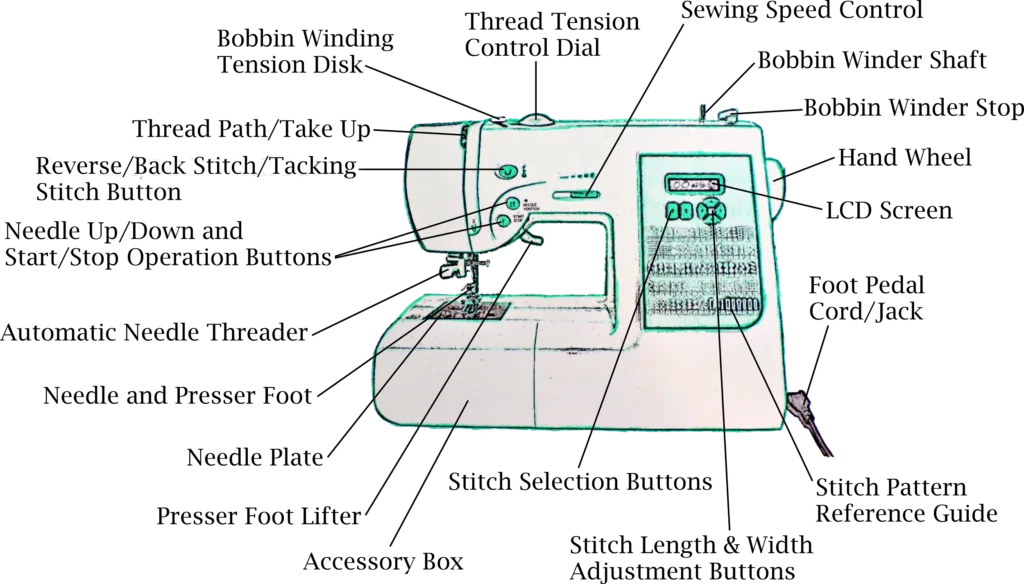
This is the diagram of the anatomy of a sewing machine and i am going to explain what each part if and what to do if it breaks. I will also mention why it is important in the long run when you are making garments.
First we will start at one of the most important parts: Needle plate
What is the needle plate? Well the needle plate is a metal plate which covers the bobbin area. It includes a hole for the needle to go through the fabric and slots for the feed dogs to move the fabric along as the machine works. There are three main types of needle plates which are:
Zigzag/standard – The zigzag plate allows the needle to move in zigzag pattern as it provides enough space for the needle to do so. It is used for decorative stitches, seam finishing, stretch fabrics and for other small tasks that do not require a straight stitch. This type of stitch is strong and durable stitch as its elasticity allows the seams to stretch without breaking or snagging.
Straight stitch – This plate is used for straight stitching as the name suggests. It provides small, round needle holes for the needle to go into without pulling the fabric in, especially if the fabric is fine or a lightweight fabric. It also offers a stable base and support for the needle.
Speciality plate and HP plates – The HP plates stand for high performance and this is a specific straight stitch type of plate and it is designed to work with a corresponding foot to produce industrial precise stitching. The other speciality plates include darning plates, cover stitch plates and chain stitch plates. These speciality plates are used for certain machines, not just a sewing machine.
Smocking is an embroidery technique that is used on garments made in the fashion industry to gather fabric into tightly pleated folds on garments, allowing the fabric to still stretch while adding decorative, textured patterns. Smocking stitches often used neutral coloured thread but coloured thread could be used depending on the fabric and the colour. The stitches that are used are few and simple. Allowing it to be an easy thing to learn and then apply onto a fabric piece.
The use of smocking is a very important technique required for a lot of fabrics as it allows non stretchy fabrics to stretch while maintaining comfort There are several types of smocking stitches
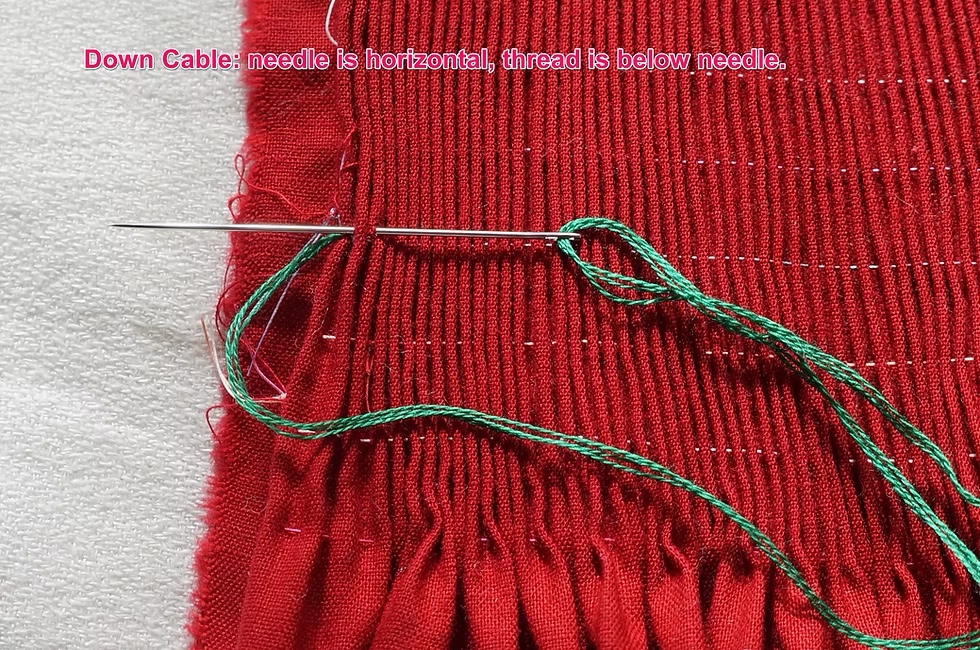
There is the cable stitch which is a foundational embroidery t5chenique that is both stylish and decorative. The technique creates twisted and horizontal cord-like lines across a piece of fabric.
The us of a cable creates a structures and neat design that is incredibly versatile and it is also used to often form the basis of geometric patterns on garments due to the structure they provide. Cable stitches can also be used for creating images like flowers or animals on garments.
Well when we first think of anything related to fashion we think of high-end luxury brands such as Gucci, Prada or Alexander Mcqueen.
This is because of their major influence on both fashion and trends. We often look at these large scale brands to help us put together stylish and eye catching pieces that present us as…well…rich or with a good amount of money that we can spend on things that aren’t bills or childcare or food. Fashion houses aim to create accessories and garments that fit luxury while still containing the artistic flare that captivates our attention. As Johannes Reponen says “Fashion houses are more than brands. They are living archives of creativity, constantly redefining luxury while preserving their heritage.”
So what exactly is a fashion house?
Well a fashion house is a prestigious company/brand that designs, creates and sells high-end and expensive items such as accessories, clothes and even fragrances that are made to be exclusive to only the small minority of the public who can afford products like that. An example would be Dior or Chanel.
Despite the often insane prices we often see fashion houses and their influence in our daily life. Even though it might not be obvious at times. For example, the aesthetic of a room. You would look for things related to that aesthetic and without you even realizing it, you are looking aat products for your room that has had their style influenced by fashion houses. However a really obvious example would be that you are walking in a major city like Paris or London. As everywhere you look, a person is wearing a style of clothing whose brand has been influenced by a fashion house. This is because fashion house set trends for both clothing and room aesthetics.